New film explores impact of program born amid liberal Arts ’70s back-to-land push
By KATE ABBOTT Contributing writer
NORTH ADAMS, Mass. — Tom Roberts remembers gently chasing the cows into the barn at milking time. He remembers coming outside on a winter day, snow falling onto his sleeves, the feel and scent of milking, the steam coming off the bucket and the taste of raw milk. And the experience was part of a college course.
Roberts is looking back 50 years to a fall semester when he studied at the Center for Resourceful Living. For five years, from 1975 to 1980, the Massachusetts College of Liberal Arts — then called North Adams State College — ran a teaching program at a 52-acre farm in Clarksburg, three and a half miles from campus.
People from the community shared their expertise in beekeeping, horseshoeing, soil testing, and how to make butter and yogurt. At the same time, college professors taught biology, physics and innovations in renewable energy. Together they explored ideas about land and ecological relationships, cooperative communities and sustainable living.
For students, it was a rare academic meeting of hands-on experience and living ideas. And according to alums who gathered this fall to remember the center, those years have influenced the course of their lives.
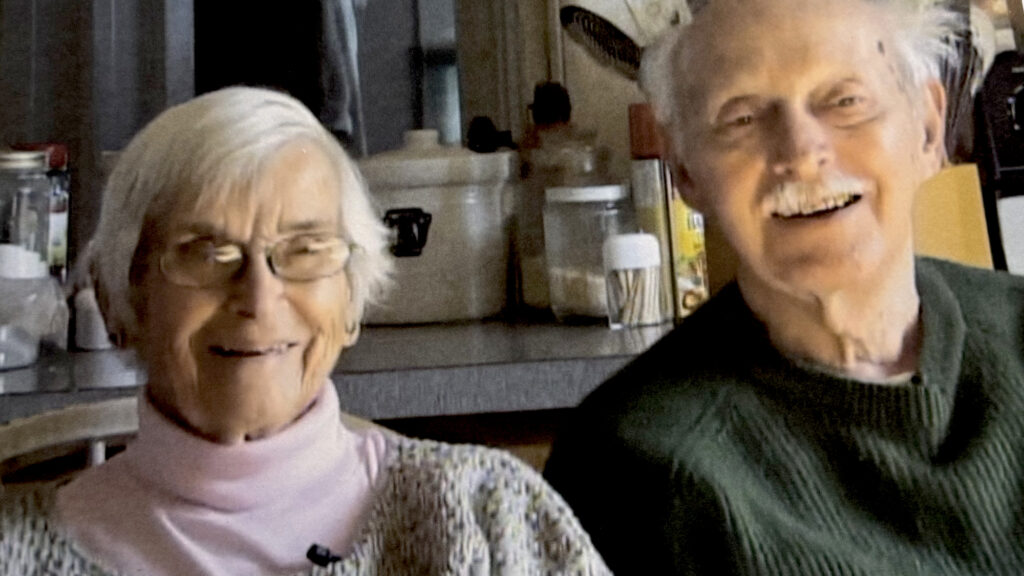
The Center for Resourceful Living was the brainchild of North Adams natives Lawrence and Elizabeth Vadnais, known to their students and friends as Larry and Betty, who imagined a place where young people could learn through acts of farming and take courses at the same time.
Larry was a sociology professor at North Adams State, and he taught his students to see patterns in the environment, social systems, culture and history. He encouraged students to
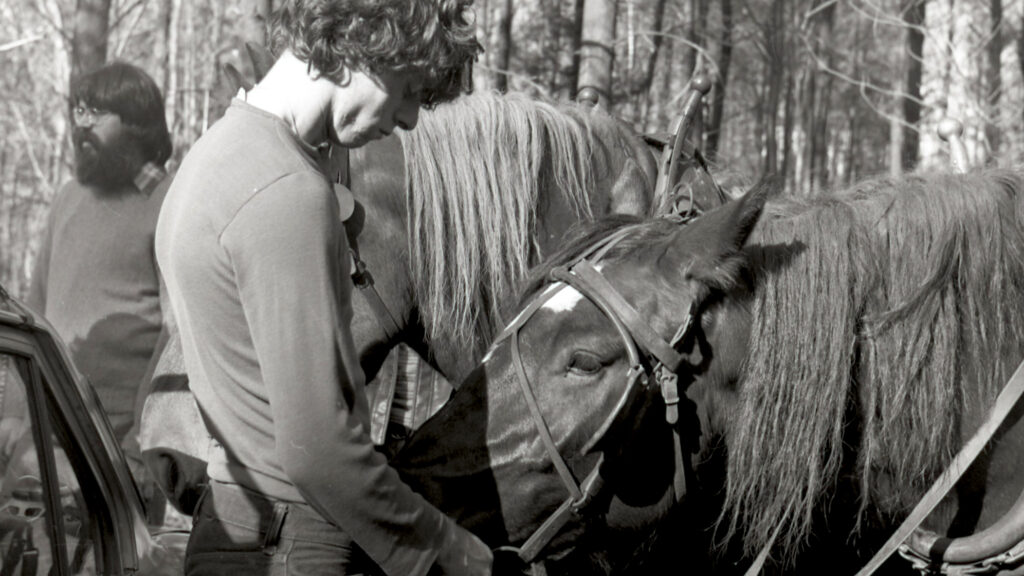
A student at the center for Resourceful Living works on a logging project with a draft horse in the late 1970s. North Adams State college operated the hands-on teaching program from 1975-80.
think through their choices and imagine ways to live sustainably, explained Sharon Wyrrick, a northern Berkshire filmmaker whose newest work, with upcoming screenings in December and January, tells the story of the center and its impact.
Roots of a local food movement
Wyrrick said the origin of her film “Did You Put Milk in the Bucket?” goes back nearly a generation. Between 2009 and 2011, she was working on a film about food systems in the northern Berkshires. And she talked with the Vadnaises then about their own homestead farm and their teaching days.
Got cows?
Sharon Wyrrick willshow her new film, ‘Did You Put Milk in the Bucket,’ at the North Adams Library on January 14.

She was becoming a farmer herself then. From 2012 to 2024, Wyrrick would steward her own land at Many Forks Farm in Clarksburg.
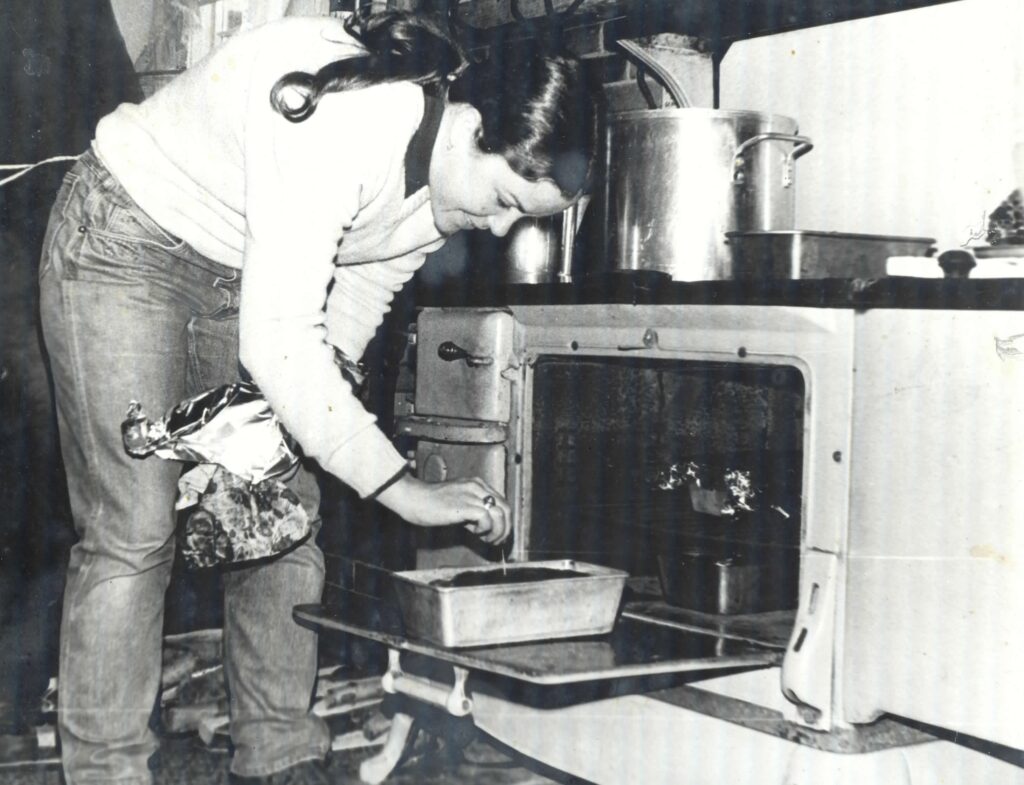
Larry had founded and directed the Center for Resourceful Living, and Betty acted as a partner in the center many ways, Wyrrick said. Betty taught the students canning and preserving and how to make bread, and she made them feel comfortable in a rural setting that was often new to them. She gave them a sense of confidence.
“Students who had contact with Larry and Betty talked about their kindness,” Wyrrick said. “Larry could draw out their skills and interests, making them believe in themselves. They would say, ‘I found out I had a strength I never knew about.’ Beyond being able to milk a cow, ‘he taught me I could go into something I didn’t know how to do and learn it — and succeed.’”

Wyrrick said she felt an element of that herself as she got to know the Vadnais family when she was starting her own farm. They lived up the road, and she said she could always stop by for a cup of coffee and some encouragement.
After farmer Molly Comstock took over the operation of Many Forks Farm in a transition that concluded last year, Wyrrick returned to those 15-year-old tapes. And she began to reach out to people who had been touched by the Center for Resourceful Living.
Although she could no longer talk again with Larry or Betty Vadnais (Larry died in 2017, and Betty died earlier this year), she found their family and colleagues, friends in the community and alums who came through the center as students.
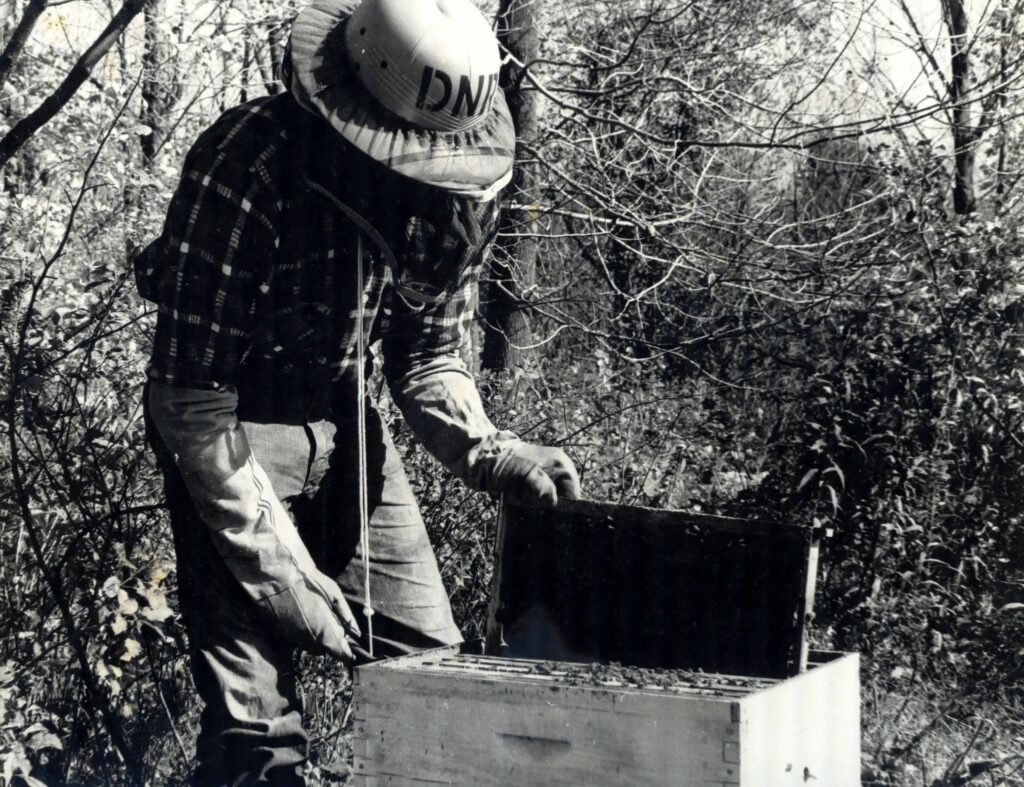
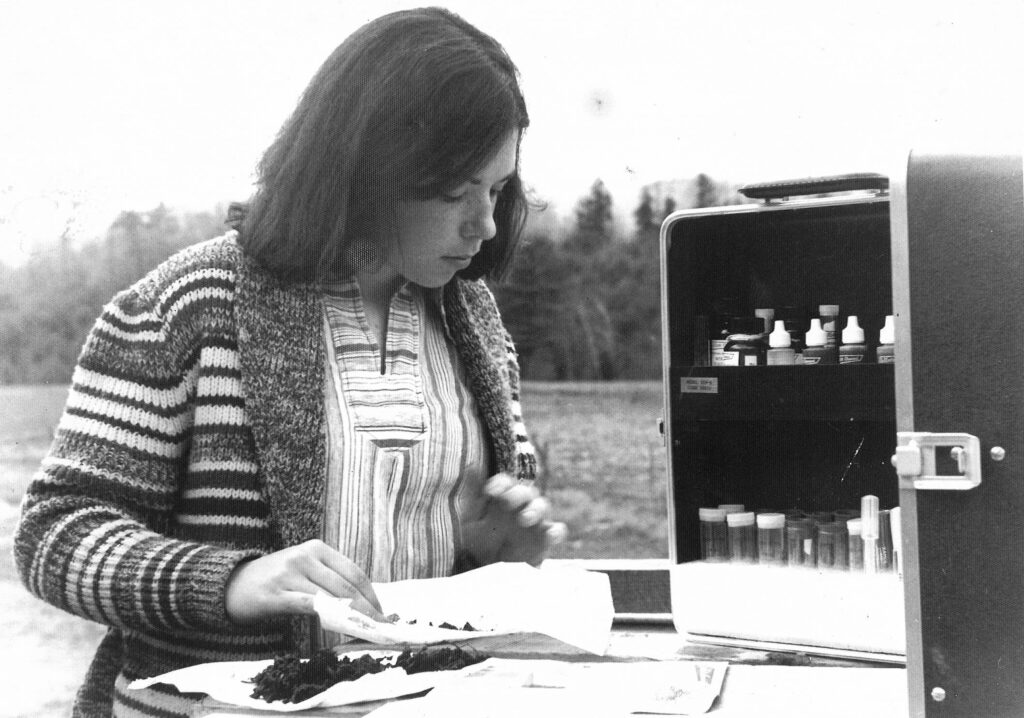
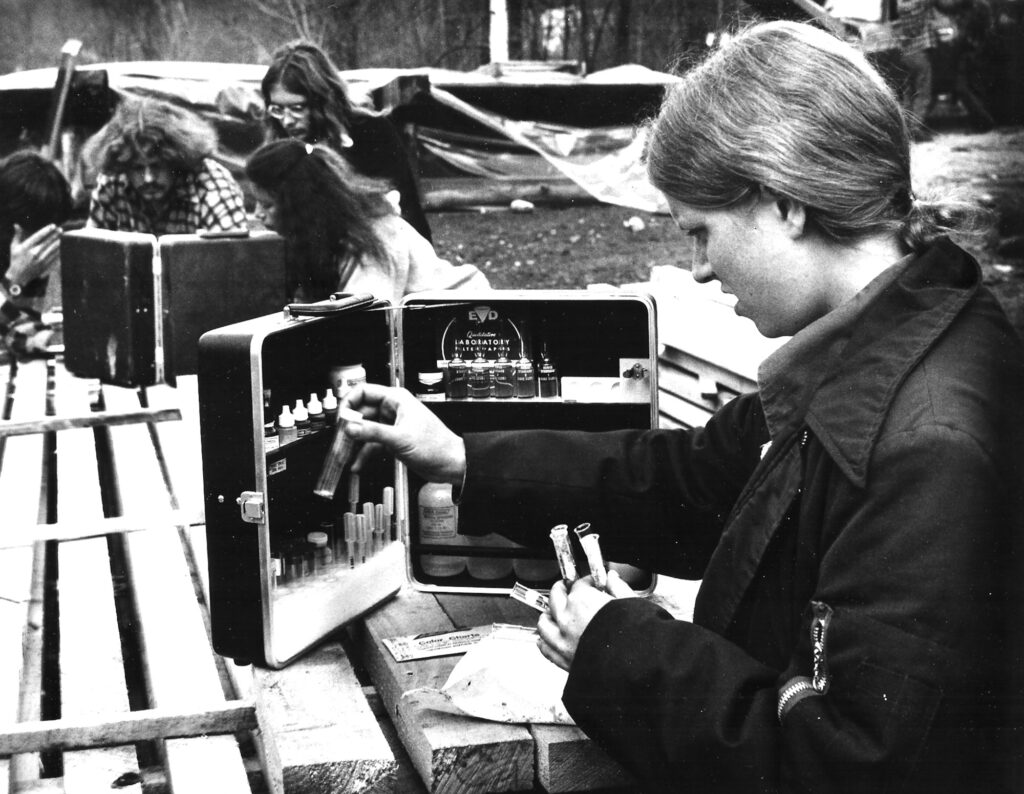
In all she sat down with some 44 people who shared their recollections of the time of change in which the center was established in 1975. And on a fall afternoon at MCLA’s Gallery 51, she looked across photos of students carving spiles to tap maple trees, checking beehives, testing soil in the garden.
Rediscovering rural living
The center took root in the early years of the environmental movement, Wyrrick said. At the beginning of the 1970s, the Clean Air Act and Clean Water Act had just been enacted, and a back-to-the-land movement was in full swing around the nation — especially in the hills of rural New England, where idealistic young people were taking up organic farming, organizing local food co-ops and reshaping the region’s foodways.
Many of the center’s students came from Boston, and the practices of farming were often new to them, outside their experience or contact, Wyrrick said.
They enrolled in the program for all kinds of reasons. Some wanted to get out of the city. Some felt limited and frustrated by their time in classrooms. Some wanted more guidance or a sense of purpose. Through the center, they told her, they found community and acceptance.
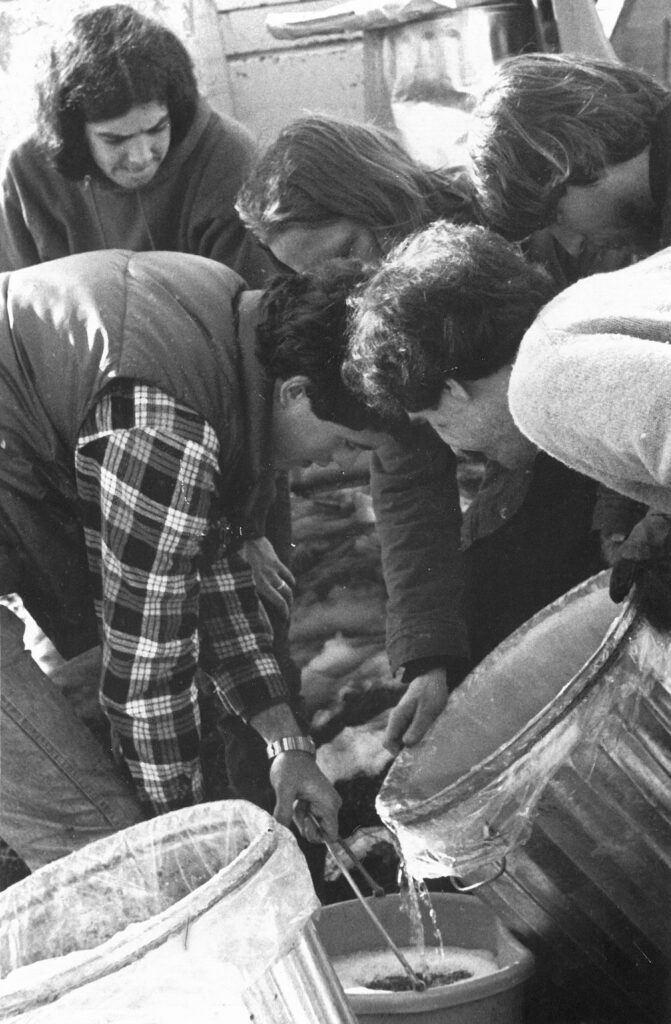
Wyrrick met many of them this fall. On Oct. 11, MCLA hosted a 50-year reunion for the center, and some 70 people came back to North Adams from across the country.
Their college-age experiences of agriculture and green living had launched them on many different life paths. One of the alumni now earns a living installing solar panels, while another is an advocate for the homeless. One became a dairy farmer, cheesemaker and farrier. And one is program director of the Massachusetts Clean Energy Center.
Wyrrick traces the Center for Resourceful Living’s influence in the choices and differences its alums have made in the world.
As they talk with her in the film, they remember how and when they first learned about the center — from their classmates who arrived late wearing farm clothes, or from a course Larry taught in the college’s fireside lounge, with students circled around on couches.
Mary Ann McFarland went to the library for some night reading and found “Living the Good Life.” The book by Helen and Scott Nearing, first published in 1954, described their experience of homesteading in Vermont and inspired a generation of young people to try living off the land.
Often through word of mouth, students found out that North Adams State College had a program that would let them live and work on a farm — and build the place from the ground up.
“We decided it was time to try a new style” of teaching, Larry Vadnais says in a recollection from about 15 years ago captured in the film. “We wanted to look for a farm, a piece of land where the students could live, and instill in young people a better sense of responsibility and a better understanding of relationship to our earth, our food supply and our energy supply.”
Warnings of scarcity ahead
The publication in 1972 of “The Limits to Growth,” a study that relied on early computer modeling, set off a discussion on college campuses around the country about a potential future in which the earth’s finite resources might not be able to sustain a growing population and ever-expanding economic activity.
Larry and Betty were living in Williamstown when first energy crisis hit in 1973, and they were thinking about what this would mean for college students. So in a leap of faith, the couple sold their house in Williamstown in 1974 and moved to a 15-acre farm in southern Vermont.
“We were thinking that so many college student were unprepared for an age of scarcity,” Larry recalls in the film. “They didn’t know where their food supply came from. And how could we help them prepare for something like that?”
‘We were thinking that so many college student were unprepared for an age of scarcity. They didn’t know where their food supply came from. And how could we help them prepare for something like that?’ — Larry Vadnais
He imagined a college farm where the students could live and work while taking classes — and where their studies could become an outgrowth of their everyday living.
MCLA had just bought 80 acres for athletic fields, and part of that land became the first seeding of the program. In the summer of 1975, 12 students started building a barn there, with a plan for a dormitory to come. They cleared some land, Wyrrick said, and did some logging in the forest, intending to use their own lumber.
The soil turned out to have too much rock ledge to allow a septic system.
So Larry and Betty offered their own homestead. They had a family farm — enough to keep a Jersey milk cow, a chicken coop and pigs, an organic garden, wood for the fire. They gave students living space in their house, as well as on campus, and converted their barn. The program began its first full academic year in the fall of 1975.
And then a new challenge struck: Larry had a heart attack in August 1976. He recovered, Wyrrick said, but he had to pull back from the physical work of running the farm. The college bought land in Clarksburg, and the program moved there for the 1976-77 school year.
Working with horses, livestock
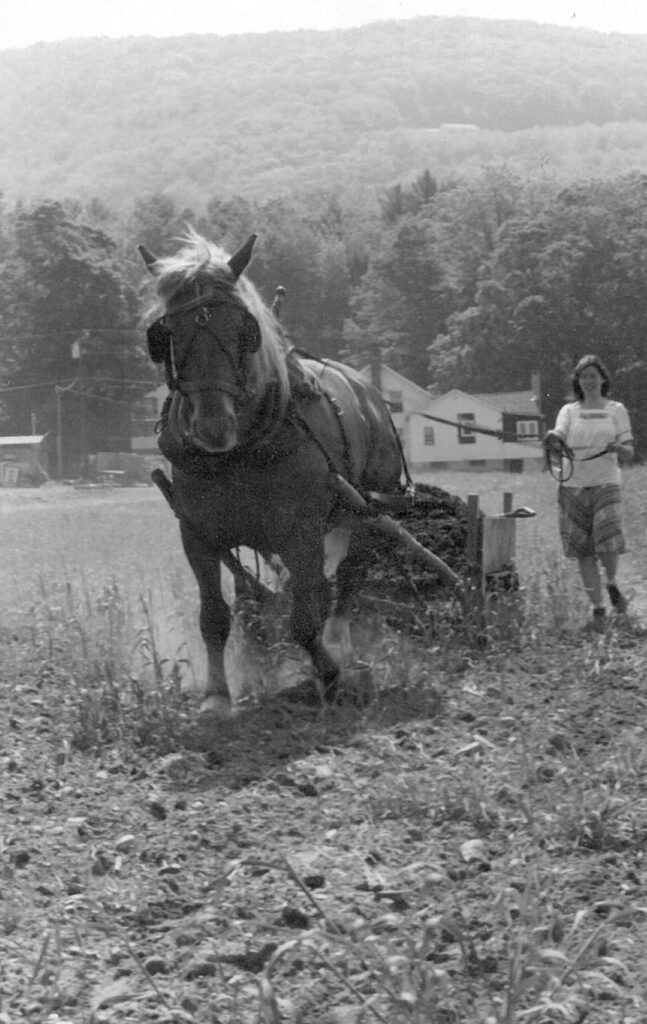
Students in the program took courses over a semester, a year, two years — and at the same time they learned hands-on skills at the farm, in the garden. Photos from the MCLA exhibit this fall show them hitching up a team of draft horses to plow and pull the hay wagons.
“Many alums brought up the horses,” Wyrrick said. “They had an impact in a lot of ways.” People remember the horses walking in the pasture, flopping down and rolling in the snow. They remember the feel of these huge animals in close contact — and the familiarity they came to feel over time as the horses became part of their lives.
They tell stories about the cows and pigs and chickens, as they grew relationships with the animals to varying extents and learned a sense of their personalities, understandings, ways of being in the world.
And they learned to slaughter pigs and chickens, Wyrrick said. They learned to understand, in a direct and immediate way, what it meant to eat meat. The experience prompted some to abstain from meat-based diets from then on.
Students in the program could study more than 30 subjects, Larry says in the film. They could pick fresh apples and make cider, apple sauce, shape snowshoes, whittle spiles from sumac to make maple syrup.
They could learn the construction of methane digesters for fuel. On cold, raw days, they could spend more time indoors and learn about cooking, repairs or caring for greenhouses.
Learning hands-on skills
Chris Kilfoyle, who retired in 2025 as president at Berkshire Photovoltaic Services in North Adams, warmly remembers his time studying with local roofer Leo Mastrianni at the center.
“He taught structures, cars, how to keep a truck going,” Kilfoyle says in the film. “That was my in to photovoltaics. I knew how to put in a hole that didn’t leak.”
He also honors and recalls Forrest ‘Bud’ Sherman, president of North Adams Sheet Metal, a family business.
“His business has grown amazingly,” Kilfoyle tells Wyrrick. “There are probably 60 guys doing welding and all kinds of good trade work in the northern Berkshires and beyond. And Bud taught a course in welding for the Center for Resourceful Living back then.”
‘He taught structures, cars, how to keep a truck going. That was my in to photovoltaics. I knew how to put in a hole that didn’t leak.’ — Chris Kilfoyle remembering Leo Mastrianni
Part of the center’s mission, as Larry saw it, was to build a network of people who could teach a range of skills for self-sufficiency.
“He always wanted to reach out to the experts in the community,” his son, Andrew Vadnais, recalls in the film. “He would call the farmers in the community professors. ‘Professor Demers,’ he would say, and Ken Demers would say, ‘Whoa.’”
In a 1970s photograph, Demers shows students how to groom a draft horse. He was a dairy farmer who taught students how to hitch a team and care for them. Larry assembled a community of local people to teach his students blacksmithing and soap making — and how to raise rabbits, drive a nail, or put in a composting toilet.
One goal, Larry says in the film, was to teach students how to become less dependent on big industries by taking more responsibility for their own lives.

Focus on green energy
Vadnais created a program across disciplines — biology, history, anthropology. William Seeley, a professor of physics at North Adams State and later at MCLA, became an integral part of the program. He was an innovator in alternative energy, Wyrrick said.
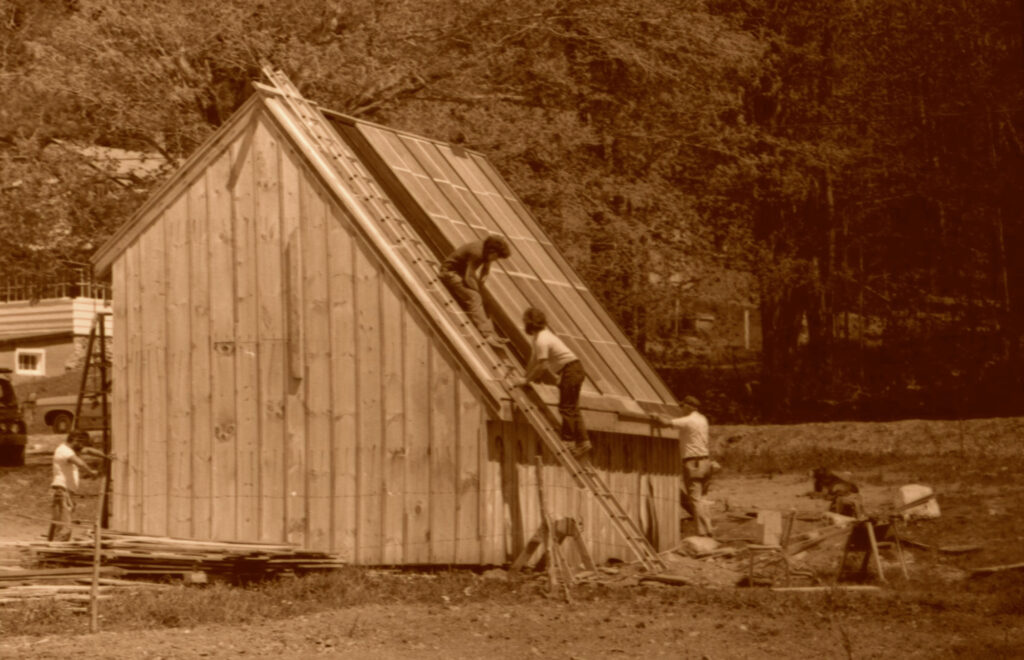
At a time when those technologies were new, Seeley designed solar panels and worked with the farm crew to install them. A photograph shows students helping to assemble them on the roof of a solar kiln they made to dry wood.
The students went on to build a solar-powered dormitory, Wyrrick said, and explored all kinds of alternative energy concepts — methane digesters, solar insulation, stone in a building’s foundation that would hold heat in the winter and cool in the summer.
And while they were learning to do, Vadnais also taught them to think, to play with ideas and to understand the choices they were making together, and how and why. He wanted to teach shared values, Wyrrick said.
In his courses, students read what were new books at the time. They debated E.F. Schumacher’s “Small Is Beautiful,” with its focus on fostering sustainable local economies, and the works of Paul Ehrlich, the Stanford biologist known for his warnings that the planet’s limited resources would become unable to sustain its growing population and rates of consumption.
For the students in North Adams and Clarksburg, these conversations involved more than abstract philosophy.
“We were talking about how we wanted to live,” alum Marty Beattie says in the film.
They were considering potential life choices and lifestyles, Wyrrick said. Talking with them today, she sees the center’s lasting influence among them — in their intentional ways of living.
“You can go into any field and carry these values with you,” she said.
Among the alums she has talked with, Wyrrick said she has met teachers and organic farmers, an orchardist, a massage therapist and a photographer, a psychologist, a social worker, a literacy advocate, a nature guide and whitewater rafter, musicians, a journalist, an LEED-certified builder and energy retrofitter, an airplane pilot, a veterinarian, and a dressage rider.
Putting lessons to work
Why did the program wind down? Some part of the answer, Wyrrick said, may have involved resources.
When Larry had to step back from some physical work because of his health, the program went through a series of farm managers. And a college environment naturally means people coming and going — and having to constantly replenish a body of skills and institutional knowledge.
Alums in the film talk about the challenges for the college running a program like the Center for Resourceful Living. Some of the college’s leaders questioned hands-on learning in a liberal arts program.
The full program as the Vadnaises had envisioned it ended in 1980, though elements of the program continued until 1986. And MCLA’s Vadnais lecture series continues today with speakers such as Elizabeth Kolbert, William Moomaw and Bill McKibben who carry on the center’s emphasis on environmental sustainability.
“That’s the gift MCLA gave many of us — the ability to have that critical thinking, to understand and look at a world bigger than we were,” said alum Dan MacFarland, who’s now the senior housing rehabilitation officer at the North Carolina Housing Finance Agency.
The program convinced him that he could make an impact, MacFarland said. The center taught students to go out into the world with the tools and confidence to make changes in the people and places around them.
“Nature gave you the test,” Larry says in the film. “And then you had to learn the lesson.”