By Kate Abbott
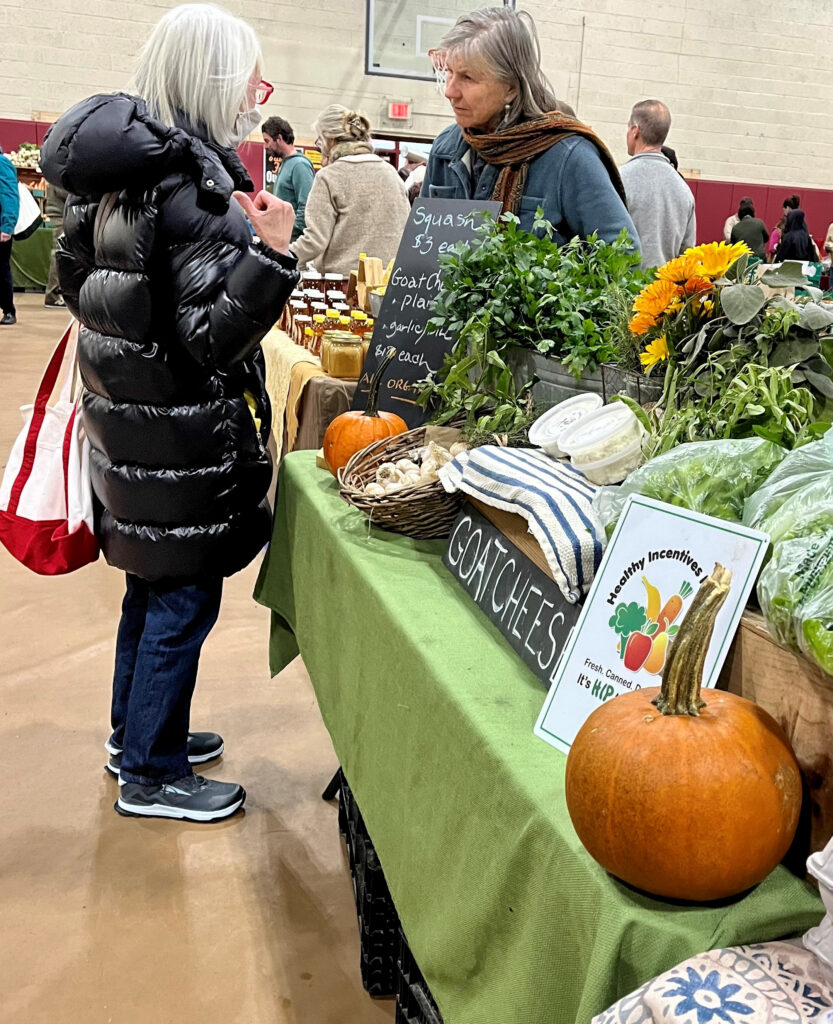
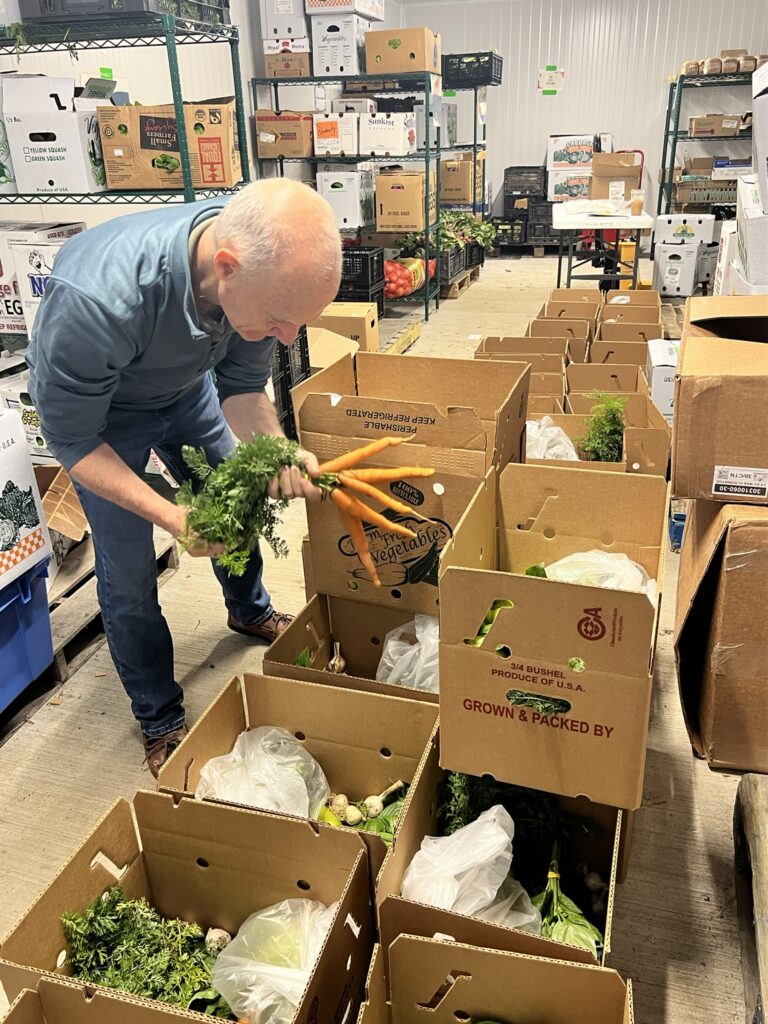
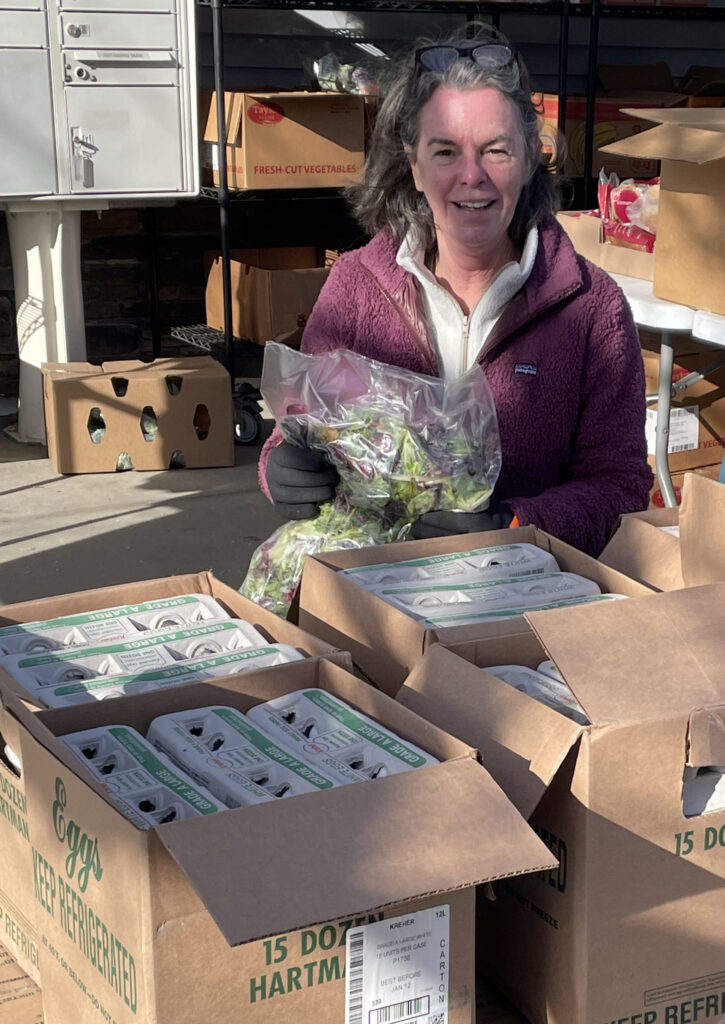
At a winter farmers market, volunteers from Berkshire Bounty box up greens and squash at the end of the day and drive them to food distribution centers.
The nonprofit group also gathers donations from wholesalers, groceries, supermarkets and co-ops and raises funds to buy produce from local farms to help keep local food pantries and meal sites stocked. And they have seen the need growing.
Local food systems are facing rising pressure since the federal administration and Republican legislators have withdrawn or held up Millions in federal funding, in the Republican budget bill in July and changes to the Supplemental Nutrition Assistance Program in the fall and in the future.
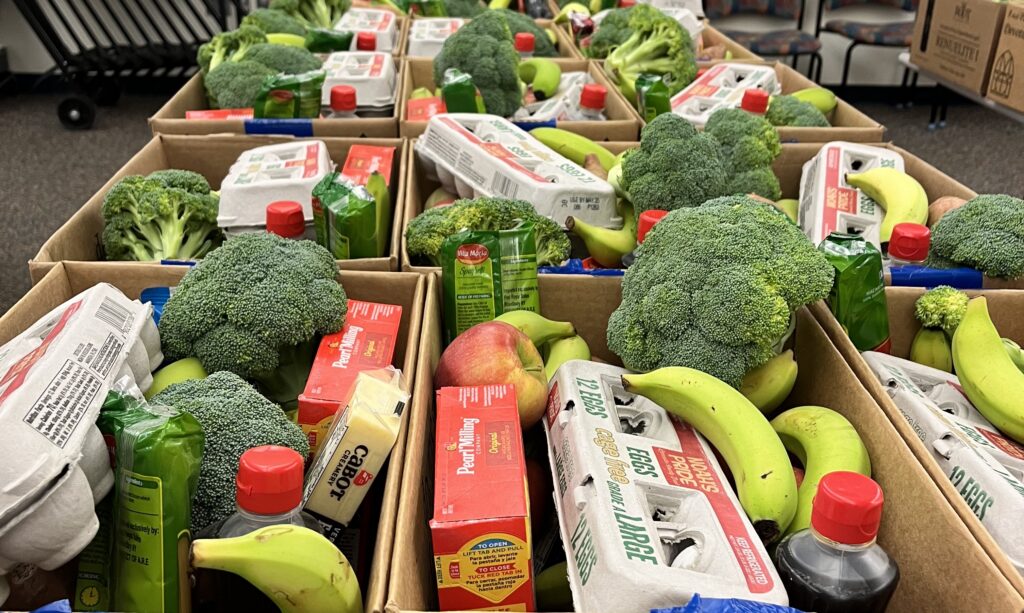
At the Berkshire Food Project, which serves a free hot meal every weekday at the First Congregational Church in North Adams, the number of people being served shot up dramatically in November after the Trump administration froze SNAP benefits in the government shutdown.
“We have seen such a drastic increase in need – more than a 45 percent increase in the past two weeks,” said Matthew Alcombright, the group’s executive director, said at a panel discussion in late November.
‘Food pantries are serving hundreds more people than they were set up for.’ — Morgan Ovitsky, executive director of Berkshire Bounty
That sudden spike in demand may have been a preview of things to come. Food security groups around the region are bracing for the effects of a series of policy changes that will sharply reduce enrollment in the federal Supplemental Nutrition Assistance Program, including expanded work requirements that took effect Feb. 1.
The Congressional Budget Office has estimated some 2.4 million people nationally will lose SNAP benefits as a result of the changes, which were included in the massive federal spending bill that Congress approved last summer.
Already this winter, local food pantries and meal sites in Berkshire County are seeing four times as many local families as they served at the height of the pandemic, said Morgan Ovitsky, executive director of Berkshire Bounty. She works with 32 food pantries and meal sites across the county.
“Food pantries are serving hundreds more people than they were set up for,” Ovitsky said.
Home grown resilience
Local and regional nonprofits including Berkshire Agricultural Ventures, Berkshire Bounty and the Massachusetts Law Reform Institute, the Massachusetts Food System Collaborative and more gave time to talk with Kate as she learned more about the complexities of SNAP and Hip and related food programs, and this story also appears on her news website at btwberkshires.com
The Pittsfield Community Food Pantry now is serving at least 197 households who come regularly each week, while The Christian Center in Pittsfield is serving 108. And when they run low, Ovitsky and her crew at Berkshire Bounty are one of the first places they can call.
Local meal sites and food pantries receive regular supplies from the Food Bank of Western Massachusetts, who support a regional food assistance network of nearly 200 sites across Berkshire, Franklin, Hampden, and Hampshire counties.
As the food bank sees higher demand for their provisions, groups like Berkshire Bounty and Berkshire Agricultural Ventures are stepping in and growing their efforts to strengthen local food networks.
The stakes are high. In the past year, the federal government has moved to withdraw millions of dollars in funding from local food systems.
The tax-and-spending mega-bill Congress passed last summer – a measure championed by President Trump and approved over unanimous Democratic opposition — will reduce SNAP funding by $186 billion over 10 years, which represents a cut of about 20 percent.
‘Based on policy changes and everything we’re hearing, we’re going to see fewer people enrolled — and less funds available to the people who are enrolled.’ — Jake Levin, the local food systems program manager at Berkshire Agricultural Ventures
At the same time, the Trump administration is cutting funding and staffing in many other parts of the government that affect local food systems – from grants and technical support for local farmers to school nutrition programs and more.
Audrey Hackett, the communications and development manager for Berkshire Agricultural Ventures, noted that the U.S. Department of Agriculture underwent a historic loss of staff last year that has hit the Northeast particularly hard.
She pointed to data compiled by the National Sustainable Agriculture Coalition. The data show, for example, that the USDA’s Natural Resources Conservation Service, which delivers vital on-the-ground conservation assistance to farmers, has lost nearly 25 percent of its employees across the nation since the beginning of 2025, including many of its most experienced workers, who took buyouts, retired or resigned. The agency lost 33 percent of its staff in Vermont, 36 percent in Massachusetts and 43 percent in New York.
Many thousands losing aid
Around the region, the federal cuts in SNAP funding are expected to affect between 10 percent and 20 percent of the people who now receive benefits. The economic ripples from that change could have much wider effects.
In Massachusetts, where 1 in 6 residents are now enrolled in SNAP, 175,000 people are at risk of losing benefits entirely, the Massachusetts Law Reform Institute estimates.
In New York, state officials have predicted 300,000 could lose benefits. Roughly 1 in 10 Vermonters, or about 65,000 people, received benefits last year through 3SquaresVT, as SNAP is locally known, and Hunger Free Vermont estimates 13,000 could lose their benefits entirely.
The halting of SNAP payments at the end of the government shutdown in November was painful but “fortunately relatively short in duration,” Hackett said. “But taking people off the SNAP rolls is something else. It is just beginning.”
Jake Levin, the local food systems program manager at Berkshire Agricultural Ventures, said that in addition to pushing some people out of the SNAP program entirely, many of those who remain could effectively see their benefits reduced.
“Based on policy changes and everything we’re hearing, we’re going to see fewer people enrolled — and less funds available to the people who are enrolled,” Levin said.
Tougher rules, more hurdles
The changes to work requirements that took effect Feb. 1 may mean a loss of benefits for many full- and part-time workers who receive SNAP. SNAP has had work requirements since the 1990s, and most working-age SNAP recipients work.
In Massachusetts, 74 percent of people age 18 to 64 who receive SNAP household benefits work, half of them full-time and half part-time, according to Jasmine Kerrissey and Nathan Meyers in a Labor Center Report through the University of Massachusetts, Amherst, from November 24, 2025.
New restrictions in the rules may make SNAP inaccessible even to people who are eligible and work steadily, said Pat Baker, Senior Economic Justice Advocate at the Massachusetts Law Reform Institute, and the requirements will now extend to many who have been exempt from them, including older workers and those caring for dependents …
In Massachusetts, 74 percent of people age 18 to 64 who receive SNAP household benefits work, half of them full-time and half part-time. — Jasmine Kerrissey and Nathan Meyers in a Labor Center Report
Unless they qualify for an exemption, SNAP recipients are required to work at least 80 hours per month, and their number of hours cannot fall below that number.
Levin and others pointed out that many SNAP recipients might see their hours change because of the nature of their work — and for reasons that are dictated by their employers. Retail workers, home health aides, gig workers, Lyft drivers, and those in food service, tourism and agriculture all may have variable and unpredictable work hours.
Before Feb. 1, people 55 and older were exempt from the employment requirements; now, the requirements apply to able-bodied workers through age 64. And while people caring for dependents under age 18 previously were exempt from work requirements, only those with dependents under 14 now are exempt. The new law also ends exemptions for homeless adults, veterans and young adults leaving foster care.
The law has cut off SNAP benefits to thousands of immigrants with official humanitarian protections. According to the Massachusetts Law Reform Institute report, most legally present immigrants have long been eligible for SNAP benefits.
And the law has cut off SNAP benefits to thousands of immigrants with official humanitarian protections. According to the Massachusetts Law Reform Institute report, most legally present immigrants have long been eligible for SNAP benefits if they meet the program’s income limits. (Undocumented immigrants have never been never eligible.)
Based on state data, the institute estimates this change could end SNAP benefits for 10,000 legally present immigrants in Massachusetts, resulting in a loss of about $20 million a year in federal food benefits that previously flowed into the state.
Universal meal programs through the public schools depend on federal funding, and students qualify through the SNAP program. — Pat Baker, senior policy advocate at the Massachusetts Law Reform Institute
Beyond the loss of aid to families that have relied on SNAP benefits, the loss of these benefits can multiply through state programs that interact with SNAP while also affecting local businesses, farmers markets, food co-ops and other organizations that accept EBT payments.
Pat Baker, a senior policy advocate at the Massachusetts Law Reform Institute, pointed out that the state has built programs allied with SNAP. Universal meal programs through the public schools depend on federal funding, and students qualify through the SNAP program, with schools relying on the federal program’s administrative structure to determine eligibility.
Even in the first few months since the new law took effect, Baker said the institute has seen more than a 10 percent decline in the number of children receiving SNAP benefits.
States face new costs, penalties
Beginning later this year, the SNAP changes Congress approved last summer will shift more of the program’s administrative cost to the states.
Baker, of the Massachusetts Law Reform Institute, explained that the federal government has always paid 100 percent of the benefits and half the cost of administering the program. States covered the other half of administrative costs.
Under the new law, state governments will be responsible for 75 percent of administrative costs. Baker’s organization projects Massachusetts will face $53 million a year in new costs as a result of this change.
The new law also imposes a more complex system of harsher rules, she said, while draining the states’ resources to oversee these new rules. Before the pandemic, for example, a state caseworker might have handled 800 or 900 cases; now they average 1,300.
Baker said the federal government is making more onerous demands on states while providing less reimbursement to run a more complicated program.
“And if they get it wrong, they get punished by bearing a cost share of the benefits,” she added.
The new law also imposes a more complex system of harsher rules, while draining the states’ resources to oversee these new rules. And if they make ‘errors’ they get punished by bearing a cost share of the benefits. — Pat Baker, a senior policy advocate at the Massachusetts Law Reform Institute
Starting in late 2027, the federal government will penalize any state for “errors” in SNAP payments by making the state pay a share of total benefits — up to 15 percent.
If Massachusetts were required to provide 15 percent of in-state SNAP benefits as a penalty, it would need to come up with about $370 million a year, according to the Massachusetts Law Reform Institute.
What the new law considers an error might be a mistake in math, but it might also be the result of an honest attempt to follow labyrinthine and vague rules, Baker said.
For example, she said, a SNAP recipient is supposed to report only their usual work hours. So if someone works overtime at the holidays and reports their overtime honestly, that is considered an error.
Or if a recipient calls the state Department of Transitional Assistance to meet a requirement, and they can’t get through because the agency has too few staff to take the call, that also would be considered an error for which the state could be penalized.
In data her organization gathered for July to October of last year, Baker said more than 40 percent of callers to the Department of Transitional Assistance couldn’t get through, because there weren’t enough caseworkers to handle the call volume. So the state’s risk of penalties under the new law is high.
A blow to local food producers
SNAP traces its origins to the Depression-era food stamp program that was revived and expanded in the 1960s and ‘70s. For the past two decades the program’s benefits, which are entirely federally funded, have been disbursed entirely through electronic benefits transfer, or EBT, cards. People may use the benefits to buy nearly all grocery items but not hot foods.
Across Massachusetts, more than 5,500 businesses are able to process SNAP payments, from supermarkets to food co-ops, farmers markets and community-supported-agriculture operations. All of them stand to lose revenue as SNAP benefits are cut, particularly if the people losing benefits wind up turning to charitable programs to find food.
Local farms in Massachusetts also are at risk of losing income from the state’s Healthy Incentives Program, or HIP, which gives a dollar-for-dollar reimbursement when SNAP users buy fresh local fruits and vegetables directly from farms or at farmers markets.
Since HIP began in 2017, says the Massachusetts Food System Collaborative, households who receive SNAP benefits in the state have bought more than $89 Million in fresh produce from local farmers.

“HIP rides on SNAP,” explained Rebecca Miller, policy director at the Massachusetts Food System Collaborative.
Hackett, of Berkshire Agricultural Ventures, said she believes based on anecdotal reports that some vendors at area farmers markets can see 25 percent to 50 percent of their sales coming from SNAP and associated programs.
The benefit of HIP dollars extends beyond local farmsm as farmers use the income to buy goods and services. — Rebecca Miller, policy director at the Massachusetts Food System Collaborative
Since HIP began in 2017, according to Miller’s organization, SNAP households in Massachusetts have purchased more than $89 million from local farmers. More than 224,000 households and 336,000 people have used HIP.
Miller said the benefit of those HIP dollars extends beyond local farms as farmers use the income to buy goods and services.
She called for a state effort to fill some of the gap being left by federal SNAP cuts.
“We hope that the state will support state-funded SNAP so that low-income families being kicked off the program do not go without,” Miller said. “State-funded SNAP allows families to continue to access HIP as well.”
In New York, a similar statewide program known as FreshConnect Checks allows SNAP recipients to expand their purchasing power at farmers markets and farm stands.
In western Massachusetts, Berkshire Agricultural Ventures has created a Market Match Fund that gives farmers markets the resources to offer a 1-for-1 match on SNAP purchases up to $30. The organization has distributed a total of $483,000 in Market Match Fund grants to partner farmers markets since 2022, Hackett said, doubling 18,800 SNAP transactions — and generating $841,000 in revenue for local farmers.
Subsidizing employers of low-wage jobs?
Nationally, more than 41 million people, or 12 percent of the population, receive SNAP benefits.
In Massachusetts, some 1.02 million people receive SNAP assistance, according to the state Department of Transitional Assistance. In Berkshire County alone, 22,250 people – more than one-sixth of the county’s population — receive SNAP benefits. In North Adams, more than 4,000 people are enrolled in SNAP, which works out to about 28 percent of the city’s population of 14,000.
Most working-age SNAP recipients have jobs. In Massachusetts, 74 percent of people age 18 to 64 who receive SNAP household benefits work, half of them full time and half part time, according to an analysis published in November by Jasmine Kerrissey and Nathan Meyers of the Labor Center at the University of Massachusetts in Amherst.
In 2024, the average SNAP benefit in Massachusetts totaled $196 a month, they write. The income level to qualify for SNAP varies by state. In Massachusetts, for those under 60 who don’t have a disability, the upper limits range from $31,296 a year for a single person to $64,296 for a family of four, according to Kerrissey and Meyers.
Most working-age SNAP recipients have jobs. In Massachusetts74 percent of people age 18 to 64 who receive SNAP are working, half of them full time and half part time.
— Jasmine Kerrissey and Nathan Meyers and the Labor Center at the University of Massachusetts in Amherst.
To put those numbers in perspective, the Massachusetts Institute of Technology’s Living Wage Calculator suggests that for a single person in the Berkshires, the minimum living wage is $17.78 an hour or $36,982 a year.
Kerrissey and Meyers note that, given that the median annual wage in Massachusetts is $62,270, more than half of the state’s workers earn less than the SNAP income limit for a family of four.
In North Adams, wage data from govsalaries.com shows the median city employee earns $47,798 in 2024, and median salary was $50,785. In North Adams public schools, the average annual salary in 2025 was $53,749, and median salary was $52,872.
Nationally, SNAP benefits effectively help to subsidize big companies that employ thousands of low-wage workers. And some of those low-wage employers – including Target, Walmart and CVS – are also places where people can spend their SNAP benefits to buy food. ‘This system increases large companies’ profits, while placing the burden of low wages and food insecurity on workers and taxpayers.’ — Kerrissey and Meyers
Nationally, Kerrissey and Meyers, say SNAP benefits effectively help to subsidize big companies that employ thousands of low-wage workers. And they point out, some of those low-wage employers – including Target, Walmart and CVS – are also places where people can spend their SNAP benefits to buy food.
Major national employers that count large numbers of SNAP recipients among their workers include T.J.Maxx, CVS, McDonald’s, Amazon, Target, Home Depot, FedEx and Walgreens. The top five employers of SNAP recipients in 2020 in Massachusetts included Dunkin’, Walmart and Stop & Shop.
Beyond the retail sector, many workers who receive SNAP work in health care. Among personal care assistants and home health aides, two of the fastest growing occupations, 1 in 3 workers rely on SNAP. So do 1 in 5 cashiers, nursing assistants, janitors and cleaners, cooks and food prep and fast food workers, hand laborers and drivers.
Keeping local food systems afloat
Ovitsky, of Berkshire Bounty, said rising food costs since the Covid-19 pandemic have reduced the buying power of SNAP benefits. As a result, some families already have come to rely on food banks so they can stretch their income to meet expenses for other necessities – electricity, heat, health care – that also are becoming more expensive.
She believes the temporary suspension of SNAP benefits in November also motivated people to seek out other food-aid options.
“We think families have lost trust in SNAP,” Ovitsky said. “The uncertainty caused a lot of fear.”
Berkshire Bounty takes collects and distributes food from area supermarkets and food co-ops – from the Berkshire Co-op Market in Great Barrington to Guido’s Fresh Marketplace in Pittsfield to the Wild Oats co-op in Williamstown and many others in between. The group also gleans from local farms at harvest time, and it raises funds to buy local meat and eggs.
Berkshire Bounty has a buyback program with the Pittsfield Winter Farmers Market through which it purchase food left over at the end of the market. The program helps farmers by giving them confidence in how much they can sell at each market, Ovitsky explained.
Across the county, the group works with more than 45 to 50 food producers and retailers as well as the food pantries and meals site it supplies.
“They can call if they have a need,” Ovitsky said. “We try to take the pulse of what’s happening.”